Showing posts with label Burr Tools. Show all posts

Thursday, 2 December 2021

The SKULL

Its here on Kickstarter! Click the link HERE.


I designed the Skull (aka Cranium) sometime in 2019 and back then several puzzlers/crafters had made 3D prints of my early designs including Jeremy Rayner from the UK and a puzzler (can't remember his name) from South Korea. Eric Fuller of Cubicdissection made a very small batch out of acrylic for sale on his website as well. I think it was pretty well received. The Skull here post-dates another "skull" design of mine; the Berro-Skull (haha, yes a play on the famous Beroccal). 

The Berro-Skull was my first skull design. As you can see its a bit crude looking


Skull (aka Cranium) generously 3D printed and gifted to me by Jeremy Raynor, UK

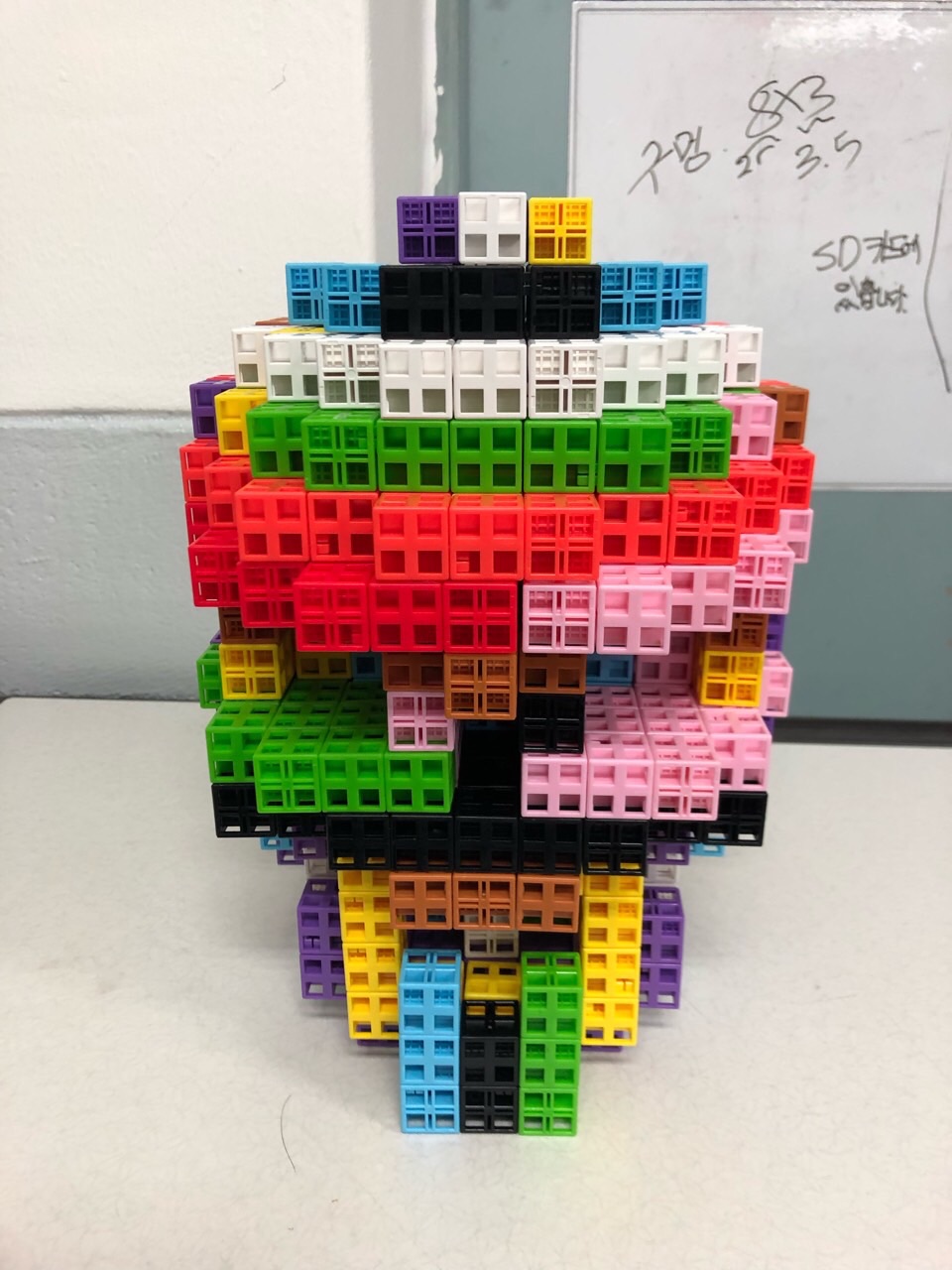
A South Korean teacher made this early version of the Skull out of plastic cubes

Final Prototype from PuzzleMaster

The original Skull design was 50 plus or so pieces pieces but I managed to refine my design over many months and bumped the piece and move count up to the current 67 and 116 respectively. The Skull is a serial interlocking puzzle which basically means that there is a particular order of sorts to both disassembling and assembling the pieces.


I tried to find ways to produce a copy of the Skull in stainless steel on my own but was not successful. Laser cutting 67 pieces was not only prohibitively expensive for one or two copies, but the real challenge was to ensure that the pieces could interlock together without getting stuck. This would required very precise cutting and tight tolerances. If any of pieces jammed or did not fit properly, the whole puzzle was wasted. Unlike wooden puzzles, you can't simply "sand" a piece down to make it fit, not without the correct type of equipment which I certainly did not have. My local fabricator was experienced in heavy metal works but not puzzles, so could not quite understand how puzzle things worked.

I was fortunate that Leon Stein from PuzzleMaster of Canada decided to give the Skull a go at commercial production in stainless steel on Kickstarter. This is my second collaboration with PuzzleMaster. For their first Kickstarter campaign a couple of years back, they chose my Dirty Dozen and Lattice puzzles, two interlocking flat burr puzzles. The campaign then was successful, which gave them confidence to attempt the second one here. Youtube videos of DirtyDozen and Lattice also started appearing soon after from several notable Youtube puzzle solvers. As of this writing, Dirty Dozen is sold out but PuzzleMaster has indicated to me they are producing more copies which will be available soon.

Trying to fabricate 67 steel pieces which dovetails together nicely with each other is no easy task. A lot of work went into the prototyping of the Skull with their manufacturer (this took well over a year and Covid-19 didn't help either) before they were happy with the final version for the Kickstarter campaign you see here. Also a very Big Thank You to Rex Rossano Perez for his time and effort to come up with laser-cut computer drawings of the Skull and Berro-Skull for me.


To back this Kickstarter Skull campaign, click HERE.


Saturday, 10 August 2019

Berro-Skull

My Berro-Skulll puzzle, which I made a prototype in stainless steel a while back is now available for sale. It is crafted by Eric Fuller and cost US$69 plus S&H.

https://cubicdissection.com/collections/all-puzzles/products/berro-skull-interlocking-puzzle

Berro-Skull photo from and courtesy of Eric Fuller

The write up about my steel prototype is found on the link below.

http://mechanical-puzzles.com/3d-puzzle-berroskull/


Thursday, 26 July 2018

3D Puzzle - Berro(Skull)

A new post up on my site about my latest attempt at producing another puzzle out of stainless steel sheets. Truly inspired by the works of Miguel Berrocal!

http://mechanical-puzzles.com/3d-puzzle-berroskull/


Saturday, 22 July 2017

Sliced Puzzle Ball

The Sliced Puzzle Ball (SPB) designed by Vesa Timonen is probably one of the smallest interlocking puzzles around and certainly the smallest in my collection. 


I had met Vesa the first time during IPP33 in Tokyo, Japan and he was really very kind to gift his SPB (his Exchange Puzzle) to me. Measuring only a micro 16mm in diameter, it consist of 6 flat "board burr" pieces with curved edges and when joined together becomes a perfectly round ball. The SPB comes with its own nice little felt-lined gift box.

Sliced Puzzle Ball next to Cast Loop
In case you don't know who Vesa Timonen is, he is a well-known designer of a number of Hanayama Cast Series puzzles including the Infinity and the famous Loop. I also have one of his less common (but unusual) puzzle called the Onion.

My copy is made by Shapeways out of white and pink dyed nylon. The SPB is currently also available (at a much larger size of about 3+cm) for sale together with some of Vesa's other puzzles listed.


When I first played with it back in 2014, I struggled with the solution and couldn't figure how to disassemble it without breaking anything...it seemed so fragile! Needless to say, the handling of such a tiny puzzle was extremely fiddly and I kept dropping it out of my fingers.  I emailed him for a solution but Vesa didn't have a step by step one instead he directed me to his Shapeways listing which showed the 6 pieces separate in an exploded view. He also indicated that some force may be necessary for the initial move. Even with that, somehow things appeared to be stuck and I couldn't take the ball apart. 


Fast forward 3 years later and this second time round, I gave the SPB another go. I finally managed to take it apart, albeit with some force... the nylon is surprisingly resilient! Thankfully nothing broke. Putting it back together was unexpectedly much easier and strangely it didn't require any force...the pieces "just slid together" back into the shape of a ball, once the pieces were in their correct orientations and positions.

I tried to configure the puzzle using Burr Tools but the programme didn't come up with any solution. Again, not sure if I got the specs correct into Burr Tools. Maybe that's why the need for some force!

Friday, 23 June 2017

Hanayama Cast Shift

Update 24 October 2017 - Dear Reader, please check out my new puzzle blog and e-store at http://mechanical-puzzles.com

One of Hanayama's latest Cast Series puzzles, the Shift was released in February 2017 with their updated and contemporary packaging bearing the name "HUZZLE", a combo of the words Hanayama and Puzzle. I was very fortunate and had the great pleasure of receiving the Shift (and Box Dice puzzle) over a nice Japanese dinner from the management folks of Hanayama, namely Kunihiro Kobayashi and Takeshi Onishi, the President and Sales Manager respectively, when both gentlemen were in Singapore for a business trip early this week. 


Measuring 4cm all round, the Shift at first glance looks somewhat like a 4-piece interlocking board burr made of metal; and there are a couple of other such similar looking wooden designs such as the Lattice and Four Frames designed by Andrey Ustjuzhanin. The Shift is cut from sheet metal (thanks to fellow puzzler/collector Michel van Ipenburg who pointed this out) and chrome plated to a glossy shiny surface. The 4 pieces consist of two congruent pairs with slots and corner triangles cut into them. If it's any help, let me say the triangles are cosmetic only and doesn't affect the solve. For better grip perhaps. 

The Shift was designed by Russian designer Kirill Grebnev who, together with Dmitry Pevnitskiy, was also behind the Cast Harmony puzzle. Apart from physical appearance, there is no other similarity between the Shift and the type of wooden board burrs named above. Certainly not the solving! Quality wise it's up to the usual Hanayama standards which is very good. Takeshi-san, the Sales Manager was telling me that Hanayama has a stringent quality control programme particularly for their puzzles that are manufactured outside of Japan. I don't own many Cast Puzzles but for those that I do, rarely have I encountered any real quality issues. The tolerances for the Shift is just nice and the pieces slide and move smoothly. 


Kunihiro Kobayashi (right), President of Hanayama Toys, Japan with Sales Manager Takeshi Onishi (left)

The Shift is rated 3 stars for difficulty, meaning it is of average difficulty. Give the Shift to an experienced puzzler and the difficulty quotient would probably be, well, average. But to a pure novice, it could mean "damn difficult" or impossible. IMHO, I think the rating here is about right. It's not too difficult, but certainly provides a fair measure of challenge. It took me a good 10-15 minutes before I figured out how the pieces interacted to unravel them. Oh, Burr Tools won't work here for sure, cos you can't solve it the normal burr way.

Once the prices came apart, to put them back together again was just the reverse procedure. Just make sure the right pieces are slotted against each other or you'll find yourself getting a bit stuck. With practice, the puzzle can be easily repeatedly solved. Like most of the Cast Series puzzles rated 3-star for their difficulty, the Shift is good for both the casual and experienced puzzler alike. For me personally, I like the Shift because I can see all the pieces and nothing is hidden from view, and the solution is pretty elegant. A fun solve no less.

And for the very reasonable price of the Cast Series puzzles, typically around US$11.50 to US$12 each, you would be hard pressed to get better value elsewhere, both in terms of overall quality and puzzle experience.

Saturday, 24 December 2016

Portico J

First off, Merry Christmas to everyone!

This post is long overdue. In fact it is a year overdue. I received the Portico J as a Christmas present from Pelikan Puzzles of the Czech Republic during last Christmas in 2015. Portico J was designed by Stephane Chomine, who (at the time of this posting) has just done over 500 designs on PWBP.


I had played with Portico J for a while, found it a tad too difficult and put it away telling myself that I would come back to it sometime in early 2016...and promptly forgot about it for the next 12 months. 

But over the last couple of days after some much required puzzle closet spring cleaning, out appears the Portico J and I decided to give it a go again. But before that, here are the stats; Portico J measures about 10cm x 5.5cm x 4.5cm. Consisting of an inverted T-shaped support with 3 traditional burr pieces and 2 board ones, it is an unusual shaped and looking interlocking puzzle. I figure this sort of shape may not appeal to everyone, but hey, there are loads of cubes and rectangles about so this is nice change. And I certainly quite like it. Comprising of Wenge and Cherry woods, it's impeccably made by the Pelikan Workshop. Everything slides and moves smoothly. 


It took me a couple of hours spread over several sessions before I finally managed to remove the first piece. It has a level 20 solution and while the movable pieces can move only in certain directions within limits, it's a much harder puzzle to take apart than the shape (or the few number of pieces) would suggest. My early attempts were met with dead ends and when I finally got the first piece out, the process rather surprising, something I did not expect. After that, a bit more puzzling was still needed before the rest of the pieces were disentangled. Full take apart requires 35 moves. 

As with such puzzles I needed Burr Tools to help with the re-assembly before everything was back to original. Can't do by memory here unfortunately!

The Portico J is very tricky right from the start and although not a very high level burr on paper, still it makes for a very challenging solve indeed. Oh, and there is a 5-piece Little Portico around too!

Monday, 28 November 2016

Theta & Triple Tango

What does a puzzle blogger do when he hasn't had time (due to work and other commitments) to play with new puzzles to write about them? Well, easy...he blogs about his own designs that have been produced by well-known puzzle craftsmen...nothing to solve and fret over!


And here are two puzzles I am shamelessly featuring, which have been beautifully crafted by Eric Fuller. There is one more coming from Eric's stable (in the coming weeks I think) but I will let that one be released first before shamelessly blogging about it!

The first is my Theta (the exact name is 9 Theta) since it has 9 burr pieces plus a cage. Excellently constructed of Maple and Purpleheart, this one has a level 15.3.3.1.2.1.2 solution requiring a total of 29 steps to completely disassemble. Great attention to detail here and yes, I still need Burr Tools to help me re-assemble after taking it apart. 


Currently all 48 limited edition copies are sold out. Personally for me it was a nice design exercise and really a "no big deal" kind of interlocking burr. My burr design capabilities are pretty limited and I was surprise Eric chose Theta to produce for his site. But the few comments I have received from purchasers of this puzzle has generally been good. 

My second design is a sliding block puzzle called Triple Tango. I was able to design Triple Tango thanks to Goh Pit Khiam who shared with me his sliding block design program which he authored a while back (a software that works similar to Burr Tools, where you can specify the shape and units of the pieces etc). 

There is also a freeware programme called the SBP Solver by Pierre-Francois Culand but this program is rather limited in that the shapes for the pieces can only be either squares or rectangles. But for anyone who has never designed a sliding block puzzle, the SBP Solver is good enough to get you going for a start.

To see the many incredible sliding block puzzle designs out there including those by Minoru Abe, Serhiy Grabarchuk, Ed Pegg, Nob Yoshigahara just to name a few, check out Nick Baxter's Sliding Block Puzzle Page.

Start Position
 The version made by Eric consists of 6 pieces and the goal is to exchange the light and dark blocks found at the top and bottom. Eric had even made an acrylic cover with the starting position of all the blocks etched onto the surface. The puzzle is made of maple, mahogany and walnut.
End Position
This puzzle can be configured for various levels of difficulty. 78 moves (5 pieces only, move a single 2x1 block from the bottom slot to the top slot). 104 moves (the version shown here) and 122 moves, by adding another 2x1 block to be surrounded by the 4 larger blocks. And why is it called Triple Tango? Because the centre pieces "dance" three times round the inside of the tray (clockwise and anti-clockwise) during play before both the dark and light coloured 2x1 blocks exchange positions. Triple Tango was also the inspiration for my Tango 72 IPP36 Exchange Puzzle in Japan this year.

Again this was a surprise for me as I didn't think Eric would produce a sliding block puzzle like that where the pieces are uncovered. Anyway 46 copies of the Triple Tango were made and they are all also sold out!


Thursday, 13 October 2016

Murbiter's Devilish Burr

The past few days were spent on Rosemary Howbrigg's IPP36 Exchange Puzzle, Murbiter's Devilish Burr designed by Primitivo Familiar Ramos. 


"Murbiter" is the ancient Arabic name of a town in Valencia, Spain called Sagunto, where Primitivo was born. I think this is the second burr Primitivo has named Murbiter; In 2014, Primitivo's own Exchange Puzzle was called the Murbiter's Psuedo Burr, the latter incidentally which was a lot easier to solve.

The design was produced for the Exchange by Brian Young of Mr Australia. The puzzle measures about 8cm x 8cm x 8cm and the pieces are made from Queensland Silver Ash while the burr ends with their rather nice edges are a contrasty reddish brown Western Australian Jarrah. Overall build quality and construction is excellent and all the pieces are snug but move smoothly.

I was stuck like that for some time even with Burr Tools
What is noticeably different about the Murbiter are the burr ends that lend the "I" shape to each piece (and according to James Dalgety, this technically should not qualify the Murbiter as a "burr" in the traditional sense of the word). The ends are not there just to make the puzzle look different but are integral to the design and the way the puzzle interlocks. Without the ends, the Murbiter has only a maximum level 6 solution. And since we are talking about the number of moves, I might as well deal with the puzzling aspect. This is a mid-level 15 solution burr and requires a total of 21 moves to take the thing fully apart. I did manage to take it apart (after quite a lot of time and effort), but putting it back together was really beyond me. It's not only devilish, its hellish! Make no mistake...it's way harder than it's level 15 solution would suggest.


I must insist that this puzzle is such a dexterous handful it requires more than two hands to solve! Even with the aid of Burr Tools, its difficult! Thank goodness I had my supportive wife to help....she supported and held the first three pieces in place with her hands while I slowly piled on the rest with mine. Brian says that the Murbiter "is a real challenge but not impossible"...which IMHO is somewhat of an understatement! Which is why Brian has also made an interesting video of himself solving the Murbiter unsupported, so go watch it. Don't worry, I doubt it will be a spoiler for anyone, given the way the solving goes.

For interlocking puzzle addicts, this is an interesting looking (and real challenging) one to add to your collection. Available from Mr Puzzle for A$59.09.

Thursday, 25 August 2016

POPP

POPP was Frans de Vreugd's IPP36 exchange puzzle and was designed by Christoph Lohe from Germany. This is my second puzzle from Lohe, the first being the beautifully crafted Closed Box


Nope, this puzzle has nothing to do with puzzle lock designer extraordinaire Rainer Popp, even though the burr pieces are "locked" inside the cage. It so happens that the external surfaces of the pieces form the shapes P.O.P.P along the outsides of the cage. But here's what Christoph had to say:-

"I always wanted to design an interlocking puzzle for beginners, with a minimum number of pieces. My choice was a 4x4x5 frame with only two sticks inside. With 15 moves to release the first stick, it is not a trivial puzzle but still managable for people who are not experienced in Burr puzzles. With a little bit of imagination, the puzzle reads "POPP" around the circumference, so I devoted it to Rainer Popp, the brilliant designer of outstanding metallic trick locks"

Pelikan Puzzles produced the exchange copies (made of bubinga and maple) and the quality of construction, fit and finish is excellent with all the pieces cut sharp and glued perfectly. The pieces fit snugly and slide smoothly, though I had it placed in my dry box for a day or two to "loosen" the puzzle a tad further to cope with Singapore's 80-90% humidity conditions.

This is an interlocking puzzle with a cage and two burr style pieces, the latter which are rather irregularly shaped (not your traditional looking ones). And designing just two burr sticks, Christoph was able to get it to a level 15 (meaning it takes 15 moves for one of the pieces to be come out of the cage), quite an achievement I would imagine. Dimensions wise its not large measuring about 6cm x 4.8cm x 4.8cm; quite petite, but comfortable enough for average size hands and fingers.


Although I am lousy with interlocking puzzles such as these, even relatively low level ones, I was able to take it apart without any help, surprising myself!  Perhaps it was because there were only two moving pieces which didn't confuse so much, but still it wasn't a walk in the park and I encountered some dead ends. After some pushing and pulling, I was able to pull one of the pieces out. 

Even though it has only 15 moves, it still takes a good memory to remember the reverse sequence to fit the two pieces back into their cage. Unfortunately I am terribly forgetful and got stuck several times while attempting to assemble the puzzle. So it was Burr Tools to the rescue; but I only relied on it for the first two moves, thereafter I figured out the next thirteen myself and pushed and pulled the pieces back into their respective positions within the cage.


A very nice little well-made puzzle that would appeal to interlocking and burr enthusiasts (or folks that like to collect high quality wooden puzzles) or both. I think Frans may have some more copies left available for sale. Pelikan is retailing it on their site for 29 Euros and for those living in the US or Canada, Puzzlemaster will also be making it available very soon.

Tuesday, 26 July 2016

Naked (Coloured) Maze

This "new" design of mine is not really new....at least not the concept. There are a number of similar puzzles incorporating see-through maze channels, including some interesting ones like the Cubus, the Boston Subway and The Lunatic Revealed.


I wanted to try my hand at designing a hidden maze and I also know a guy who can do laser cutting and familiar with the puzzles (packing ones) that he has been churning out for me. It was also an opportunity to try out Burr Tools for this design...a puzzle with only ONE moving piece.


Basically the Naked Maze consists of 3 layers of 10mm thick acrylic (plexiglass) that is glued together and these 3 are sandwiched by a 3mm top and 3mm bottom translucent coloured layer. Each of the 3 main layers have maze channels cut into it and the combination of the 3 layers results in both horizontal and vertical channels throughout the "box".

The maze has a number of twists and turns and in this first prototype, there are about 12 dead-ends. The object is to pass a ball bearing through the hole in the green layer, navigate and exit the ball from the hole in the orange layer. For this puzzle, I used a 9.5mm ball bearing that is heavy enough and fits very nicely inside the channels.


Because I used transparent acrylic, you can actually see the ball from the side of the puzzle as well as through the top and bottom coloured translucent layers. However, while you can see the ball, the channels are not that easy to determine and the dead-ends make the puzzle a tad harder. For a really difficult puzzle, the maze can be constructed of all black (opaque) acrylic and there would be no way to see the channels and/or the ball, making it a really "blind" maze in every sense of the word.


I know how the channels run (cos I designed them) so it wasn't difficult for me to navigate the ball to the exit rather quickly. I am curious to see how another puzzler or non-puzzler would perform, so this coming weekend, I will try it on some unsuspecting friends and also ask award-winning puzzle designer Goh Pit Khiam to have a go at it when we next catch up. My next prototype will be a 4 layer maze which should make it even more challenging, particularly if its a blacked-out totally blind one.

And did I mention its really cool to see the solve on Burr Tools...as you watch a little cube (representing the ball bearing), going in one hole and out the exit, racing through the channels using the shortest route possible!

Wednesday, 27 April 2016

Chain Store

Name
Chain Store

Designer
Goh Pit Khiam


Manufacturer & Availability
Crafted by Tom Lensch. Limited copies may be available but I can't be sure. PM me if interested.

Type & Classification
3D Packing

Dimensions
Box is 5cm x 5.7cm x 6cm. Each of the links in the chain is 4.7cm x 3.1cm x 0.8cm.

Materials & Construction
Box is yellowheart while the chain links are cherry. Excellent construction, fit and finish. Tolerances are just right and everything fits nicely.  

Overview
Chain Store is an old design from Goh Pit Khiam and it wasn't until recently that working copies of the puzzle were produced. The goal is simple; to fit the chain links (which are all interconnected and you can't separate them) into the box flush with the top. Hence the very appropriate name "Chain" - "store". It's been described by John Rausch as a "one piece packing puzzle"...well, quite literally true isn't it?

The links when stretched out look rather long and it is obvious that you can't just stuff them into the box. Because of the tight tolerances, any attempt to force in the links would most certainly result in jamming (and probably damage as well). According to Goh, there is only one solution to pack the links in. Sorry but Burr Tools doesn't work here (even with the "grouping" function).

It is clear that the links must somehow be grouped together in a certain way to take up the smallest and correct size footprint in order to fit into the box just nicely. The links can be rotated in different ways and this is a necessary part of the solving process. But this arranging and grouping of the links is no walk in the park, despite only 5 pieces. In fact it is darn right difficult and I found myself trying a great number of combinations to no avail. Always, one link would be protruding a bit and refuse to go in the box. This puzzle requires you to solve the links outside the box before insertion.

Difficulty
Very challenging puzzle. I don't know whether it was just my lucky day or not, but I managed to solve it in about 40 minutes. Got the 5 links all in their correct positions and popped it into the box. Still, I can imagine some puzzlers would take much longer than that. At the request of Goh, I have not placed a link here to the photo solution. 

Summary
Goh has designed a number of challenging and interesting packing puzzles, including IPP award winning ones such as Dancing Shoes and Road Blocks. But Chain Store is perhaps the most unusual and unique amongst them. A fabulous puzzle with a great design concept.  A must-have in any collection.

Friday, 15 April 2016

Derek's Half Dozen

Name
Derek's Half Dozen

Designer
Derek Bosch. Just did a review of his Pole Dancers in the previous post.


Manufacturer & Availability
Produced by Eric Fuller in 2013. A limited edition of 40 copies sold for US$69 each. Not available.


Type & Classification
Interlocking solid

Dimensions
6.5cm x 6.5cm x 6.5cm

Materials & Construction
Six pieces comprising three woods; ash, wenge and bubinga. Great looking! Excellent construction, fit and finish with tight tolerances. All the pieces slide and move very smoothly.

Overview
Externally it looks pretty just like an ordinary burr (save for the three pairs of different coloured sides) but the 6 pieces forming this puzzle are anything but ordinary. They are not your regular burr pieces with the typical notches and groves but rather odd shaped with loads of protrusions as you can see from the photo below.

This is an extremely difficult puzzle to take apart with a level 26.9.5.2 solution, meaning it requires 26 moves to remove the first piece. I was stuck for quite a while during the opening moves trying to figure out things. However, something totally unexpected happened next. I am not sure if it is my copy that was a bit looser than intended (because my wooden puzzles are usually kept in a camera dry box for a few days prior to play). But midway through the solving, I was actually able (to my great and pleasant surprise) to rotate one of the pieces out without any force whatsoever. Having done that, the rest of the pieces came out quite easily thereafter. OK, so its not the way it should have been done and I am not sure how I did it...but too late...its over! Was it an accidental discovery of something in the puzzle that neither Derek nor Eric were aware off?

[Edit 16 April 2016: I am informed by Derek that apparently this rotation is well known and certainly not intended]


Difficulty
"Fiendishly difficult" is what Eric describes on his site. Fully agree. The movements of the pieces are absolutely dizzying! Without Burr Tools, my copy will have remained on the shelf in their separate pieces. If the rotation of that one piece had not been possible, I definitely would not have been able to take the Half Dozen apart. Even with the aid of Burr Tools, trying to reassemble the six pieces was still quite a handful (no pun intended). 

Wednesday, 27 January 2016

Vauban H5

Name
Vauban H5


Designer
Stephane Chomine. As of this post, he has a staggering 497 published designs on PWBP. Stephane stopped posting since mid 2014 but he continues to come up with new designs that are now and again picked up by various puzzle craftsmen.

Manufacturer & Availability
Manufactured and sold by Pelikan Puzzles of the Czech Republic. From what I can see from their website, its currently unavailable. Your best bet is to drop them an email to see if they have any spares or will be producing some more in the future.

Type & Classification
Interlocking solid

Dimensions
7.2cm x 7.2cm x 6cm

Materials & Construction
My copy is the Red version. Made from Bubinga with Maple, the Vauban H5 is excellently constructed. All the 4 pieces are cut accurately and precisely with tight tolerances and with edges slightly beveled. But despite this and all the pieces pretty snug against each other, everything slides very smoothly and I experienced no jamming whatsoever. A very high quality piece of work.

This is the stage I usually reach before getting stuck

Overview
As usual, this level of burr is beyond me. And despite me spending a relatively long time with this one, I could not get the first piece out. After like 10 to 15 moves, I would eventually end up stuck at some dead end. And from what I can tell, there are quite a number. Each of the pieces seem to be moving around another in all directions. Beyond a certain point, I was lost in confusion and at times even had trouble getting back to the original position.

The design is also such that you can't really see what goes on inside the spaces and this makes it a lot more difficult.

Difficulty Level
Very difficult! Although only 4 pieces, this is a mid-to-high level burr with a level 31.10.7 solution (meaning it takes 31 moves to remove the first piece). A total of 48 moves to completely disassemble the puzzle. I had to use burr tools both for the dis-assembly and re-assembly. Looking at the solution, my first moves were quite wrong to begin with.


Summary
For puzzlers who enjoy this kind of challenging burrs with the time and patience to match, the Vauban H5 is a must-have. Not only great looking (just look at the diagonal Maple trim along the sides) and extremely well built, but value for money too. However, if you are like me, lousy with burrs but just can't resist the beauty and craftsmanship, then go for such puzzles anyway. Even if you can't solve them, they will look great in your puzzle cabinet.

Monday, 7 December 2015

Cubic Burr

Designed by Tom Jolly, who has to-date 68 designs on PWBP, the Cubic Burr was Tim Udall's IPP35 Exchange Puzzle. Also made by Tim himself, this one is hardy, can stand knocks and abuse. That's why I took it with me on my present business trip for some puzzling (instead of pubbing) fun after work.


The Cubic Burr is a 6-piece interlocking solid with one congruent pair of pieces. Its made of Red Meranti which gives it the dark brown appearance. The Cubic Burr is 7.5cm square all round and solid and heavy. Construction and finish is good and all the pieces appear well cut and glued together. The only gripe I have is that I wished the pieces could slide against each other more smoothly; it was a bit stiff here and there but thankfully there was no jamming during play and things improved as the burr got broken in.

The Burr came solved so the object is to disassemble and re-assemble the 6 pieces. It didn't look like one of those complicated type high-level burrs but this puzzle is no walk in the park either with a level 6.9.4.5.2 solution. Right from the start I was stumped a while and it took me a good nearly 10 minutes to move the first piece, after a bit of shaking and light banging to make sure the pieces were not stuck to each other (which I initially thought they were).


With some manipulation, I was able to remove the first piece and after nine more moves, the second came out. Because the burr consists of only 6 pieces and the first two came out in a similar sort of way, it was easier to remember the moves and the orientation of the pieces. This is one of those burrs which I did not have to resort to Burr Tools for assistance. Of course I didn't want to scramble the pieces and give myself problems later. So I did the smart thing to lay the pieces out on my hotel room bed in the order they came apart during the solve. Returning the pieces to the solved cube was the reverse and I managed this without too much fuss.

Overall a nice and well made interlocking puzzle with just the right level of difficulty for an exchange puzzle. Fun to solve too!

Thursday, 26 November 2015

Ternary Burr

The Ternary Burr is quite a monster of a burr. Not only in terms of its physical size (9.5cm x 9.5cm x 12.5cm) but also the level of difficulty. I have had the Ternary Burr for two years now, having bought it from Eric Fuller back in 2013 and its been hiding at the back of my puzzle closet since.

The Ternary Burr belongs to a group of puzzles that are known as "N-ary" puzzles. A very informative write-up with loads of photos about "N-ary" puzzles by Goetz Schwandtner can be found here

Designed by well-known Singaporean puzzle designer Goh Pit Khiam, there are only 68 copies of the Ternary Burr that have been so far made and sold commercially; 30 copies from Brian Young in 2009 and 38 from Eric Fuller.  Hence the rather expensive (but value for money) price of US$274.

The Ternary Burr has a "base-3" mechanism with inherent dead ends. What is this "base-3" mechanism? Here's what Goh had to say:-


In an n-ary puzzle, each stage can have n positions. In the Ternary burr, each stage consists of only one piece which can be in one of three different positions. If there are two stages, there would be 3 x 3 different positions of both pieces. If there are m stages, then there are n^m different positions. The mechanism of the puzzle tries to make the puzzle go through all these positions, thus creating plenty of moves before disassembly. In the Ternary burr mechanism, it doesn't really go through every possible combination of piece positions. Some of them are dead-ends. In the later designs like the NumLock, it really does go through every piece positions before dis-assembly occurs.


The Ternary Burr from Eric is made from Cherry and Walnut. It consists of a total of 22 pieces including a 17-piece cage which can be dismantled fully. The cage houses 5 Walnut interlocking burr pieces which have to be shifted in a particular sequence requiring a total of 75 moves to remove the first piece. A total of 98 moves is needed to fully take apart the entire burr. And there is only one solution!

Construction fit and finish is excellent and the pieces all move smoothly after some dry-box de-humidification.Given its size, the Ternary Burr is very heavy and solid and quite a large handful to hold for average size hands.


Needless to say, a burr at this level is well beyond me. I tried to figure out the N-ary sequence but this proved way to difficult and confusing, resulting in me getting stuck a number of times mid-way. A very good memory would certainly help, since there are repeating moves.  

Even with the aid of Burr Tools which I needed, it took a fairly long time for me to get through the entire sequence and extract the first piece. And then to disassemble the remaining 17 pieces of the cage. Putting back the whole thing together took me even longer as I grappled with the 22 pieces, first forming the rectangular cage and then going though the reverse N-ary moves to insert the 5 burr pieces back into the cage. For a really amazing feat of the Ternary Burr's re-assembly (without any aids), check out Brian Young's video on YouTube. Incredible!


The Ternary Burr is no doubt for hardcore burrists. Yes, today there are some higher level burrs around but none made in the fashion of the Ternary Burr, with most of its pieces dissimilar, as you can see from the photo. Unfortunately its not commercially available and the only way to get one is through private sale or auction. Given that they are also very difficult to make (Eric said "crafting this design took all (his) abilities"), we are unlikely to see any new copies on the market anytime soon.